

 290 お客様のコメント


簡潔な内容
分析後のすべての種類の試験の暦年に基づくエキスパートによるCCA-F試験問題、それは開発動向に焦点を当てた試験論文に適合し、そしてあなたが直面するあらゆる種類の困難を要約し、ユーザーレビューを強調する 知識の内容を習得する必要があります。 そして他の教育プラットフォームとは異なり、Claude Certified Architect Foundations (CCA-F)試験問題は暦年試験問題の主な内容が長い時間の形式でユーザーの前に表示されていないが、できるだけ簡潔で目立つテキストで概説されていますCCA-Fテストガイドは、今年の予測トレンドの命題を正確かつ正確に表現しており、トピックデザインのシミュレーションを通して細心の注意を払っています。
私たちのClaude Certified Architect Foundations (CCA-F)研究問題は質が高いです。 それでテストの準備をするためのすべての効果的で中心的な習慣があります。 私たちの職業的能力により、CCA-F試験問題を編集するのに必要なテストポイントに同意することができます。 それはあなたの難しさを解決するための試験の中心を指しています。 最も重要なメッセージに対するCCA-Fテストガイドの質問と回答の最小数で、すべてのユーザーが簡単に効率的な学習を行えるようにし、余分な負担を増やさずに、最後にCCA-F試験問題にユーザーがすぐに試験合格できるようにします。
真のシミュレーション環境
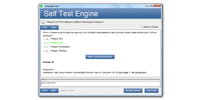
多くのユーザーが最初に試験に参加しているので、上記の試験と試験時間の分布は確かな経験を欠いており、したがって試験場所で混乱しがちであるため、つかむ時間は結局試験を完全に終わらせなかった。 この現象の発生を避けるために、Claude Certified Architect Foundations (CCA-F)試験問題は各試験シミュレーションテスト環境に対応する製品を持ち、ユーザーはプラットフォーム上の自分のアカウントにログオンし、同時に試験シミュレーションに参加したいものを選択します。CCA-F試験問題は自動的にユーザーが実際のテスト環境のシミュレーションテストシステムと同じように提示され、ソフトウェア内蔵のタイマー機能は体系的な達成するために、ユーザーが時間をかけてより良い制御を助けることができます。CCA-Fテストガイドを使って問題を横から解決するためにユーザーのスピードを向上させるためにも。
コースの簡単な紹介
ほとんどのユーザーにとって、関連する資格試験へのアクセスが最初であるかもしれないので、資格試験に関連するコース内容の多くは複雑で難解です。 これらの無知な初心者によれば、CCA-F試験問題は読みやすく、対応する例と同時に説明する一連の基本コースを設定し、Claude Certified Architect Foundations (CCA-F)試験問題でユーザーが見つけることができるようにしました 実生活と学んだ知識の実際の利用に対応し、ユーザーと記憶の理解を深めました。 シンプルなテキストメッセージは、カラフルなストーリーや写真の美しさを上げるに値する、CCA-Fテストガイドを初心者のためのゼロの基準に合うようにし、リラックスした幸せな雰囲気の中でより役立つ知識を習得します。 団結の状態を達成するために。
Anthropic CCA-F 試験シラバストピック:
| セクション | 比重 | 目標 |
|---|---|---|
| コンテキストの管理と責任あるAIの実践 | 15% | - 安全性と法令遵守
|
| ツールの設計とMCPの統合 | 18% | - Model Context Protocol (MCP)
|
| Claude Codeの設定とワークフロー | 20% | - CI/CDおよび開発プロセスとの統合
|
| エージェントアーキテクチャとオーケストレーション | 27% | - Anthropic Agent SDKの使用法
|
| プロンプトエンジニアリングと構造化された出力 | 20% | - 構造化データの生成
|
Anthropic Claude Certified Architect Foundations (CCA-F) 認定 CCA-F 試験問題:
1. You are building developer productivity tools using the Claude Agent SDK. The agent helps engineers explore unfamiliar codebases, understand legacy systems, generate boilerplate code, and automate repetitive tasks. It uses the built-in tools (Read, Write, Bash, Grep, Glob) and integrates with Model Context Protocol (MCP) servers.
An engineer submits two requests:
- Request A: "Rename the getUserData function to fetchUserProfile
everywhere it's used."
- Request B: "Improve error handling throughout the data processing
module - add try/catch blocks, meaningful error messages, and ensure
failures don't silently corrupt data."
For which request does specifying an explicit multi-phase workflow (such as analyze -> propose
-> implement with review) most improve outcome quality?
A) Request B, the error handling task
B) Both requests benefit equally
C) Neither request benefits significantly
D) Request A, the function rename task
2. A customer contacts the agent about a warranty claim on a power drill. Resolving this requires multiple sequential tool calls: get_customer to look up their account, lookup_order to find the purchase details, and then either process_refund or escalate_to_human depending on warranty eligibility. You're implementing the agentic loop that orchestrates these steps using the Claude API. What is the primary mechanism your application uses to determine whether to continue the loop or stop?
A) You manually set the tool_choice parameter to "none" after the final expected tool call to force Claude to stop requesting tools.
B) You check whether Claude's response contains a text content block - if text is present, the agent has produced its final answer and the loop should exit.
C) You check the stop_reason field in each API response - the loop continues while it equals
"tool_use" and exits when it changes to "end_turn" or another terminal value.
D) You track the number of tool calls made and exit the loop once a preconfigured maximum is reached.
3. An application frequently repeats the same background instructions in every API request. What is a potential downside?
A) Higher token usage and cost.
B) Reduced model capability.
C) Increased hallucinations only.
D) Lower reliability.
4. You are building a multi-agent research system using the Claude Agent SDK. A coordinator agent delegates to specialized subagents: one searches the web, one analyzes documents, one synthesizes findings, and one generates reports. The system researches topics and produces comprehensive, cited reports.
In production, you observe that simple fact-checking queries (e.g., "What year was the Paris Climate Agreement signed?") traverse all four subagents sequentially, consuming 40+ seconds and significant tokens per query. Complex comparative research benefits from the full pipeline.
Your query distribution is diverse and evolving as users discover new applications. What's the most effective approach to optimize for varying query complexity?
A) Train a query complexity classifier on labeled historical data to predict optimal subagent combinations, retraining periodically as query patterns evolve.
B) Implement pattern-based routing that categorizes queries by structure (single-fact vs.
comparative vs. analytical) and maps each category to a predefined subagent combination.
C) Have the coordinator analyze each query and dynamically decide which subagents to invoke based on its assessment of query requirements.
D) Create a fast-path for factual questions that bypasses subagents entirely, routing all other queries through the complete pipeline to ensure research thoroughness.
5. You've configured the system so that all four subagents have access to the complete set of
18 tools. During testing, agents frequently call tools outside their specialization - the synthesis agent attempts web searches, and the report generator tries to analyze documents. What is the primary cause of this poor tool selection behavior?
A) The coordinator cannot track which capabilities each subagent has, leading to misrouted tasks.
B) The agents' role descriptions in their system prompts conflict with having access to tools outside that role.
C) The tool definitions consume too much context window space, leaving insufficient room for task content.
D) Choosing from 18 tools instead of 4-5 relevant ones increases decision complexity beyond reliable selection thresholds.
質問と回答:
| 質問 # 1 正解: A | 質問 # 2 正解: C | 質問 # 3 正解: A | 質問 # 4 正解: C | 質問 # 5 正解: D |


 0
0
 0
0
 0
0
 0
0
