
 17 お客様のコメント
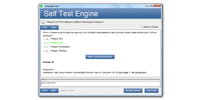

ダウンロード可能なインタラクティブC_TS462_2601テストエンジン
SAP Certification Examsの基礎準備資料問題集には、SAP Certification Exams C_TS462_2601試験を受けるために必要なすべての材料が含まれています。詳細は、正確で論理的なものを作成するために業界の経験を常に使用しているSAP Certification Exams によって研究と構成されています。
JPNTestでSAP C_TS462_2601問題集をチョイスする理由
JPNTestは、1週間で完璧に認定試験を準備することができる、忙しい受験者に最適な問題集を提供しております。 C_TS462_2601の問題集は、SAPの専門家チームがベンダーの推奨する授業要綱を深く分析して作成されました。弊社のC_TS462_2601学習材料を一回のみ使用するだけで、SAP認証試験に合格することができます。
C_TS462_2601はSAPの重要な認証であり、あなたの専門スキルを試す認定でもあります。受験者は、試験を通じて自分の能力を証明したいと考えています。 JPNTest SAP Certified - Implementation Consultant for SAP S/4HANA Cloud Private Edition, Sales は、SAP Certification Examsの217の問題と回答を収集して作成しました。SAP Certified - Implementation Consultant for SAP S/4HANA Cloud Private Edition, Salesの知識ポイントをカバーし、候補者の能力を強化するように設計されています。 JPNTest C_TS462_2601受験問題集を使用すると、SAP Certified - Implementation Consultant for SAP S/4HANA Cloud Private Edition, Salesに簡単に合格し、SAP認定を取得して、SAPとしてのキャリアをさらに歩むことができます。
C_TS462_2601の迅速なアップデート対応
C_TS462_2601試験に変更がございました場合は、現在の試験と一致するよう、瞬時に学習資料を更新することができます。弊社は、お客様に最高、最新のSAP C_TS462_2601問題集を提供することに専念しています。なお、ご購入いただいた製品は365日間無料でアップデートされます。
C_TS462_2601試験の品質と価値
JPNTestのSAP Certification Exams C_TS462_2601模擬試験問題集は、認定された対象分野の専門家と公開された作成者のみを使用して、最高の技術精度標準に沿って作成されています。
あなたのC_TS462_2601試験合格を100%保証
JPNTestテスト問題集を初めて使用したときにSAP Certification Exams C_TS462_2601試験(SAP Certified - Implementation Consultant for SAP S/4HANA Cloud Private Edition, Sales)に合格されなかった場合は、購入料金を全額ご返金いたします。
SAP C_TS462_2601 試験シラバストピック:
| セクション | 目標 |
|---|---|
| 価格設定と請求処理 | - 請求処理プロセス
|
| 営業プロセスの設定 | - 取引先決定と出力管理
|
| 受注履行とロジスティクス領域との連携 | - 在庫・倉庫管理との連携
|
| SAP S/4HANA 営業領域の概要 | - SAP S/4HANA 営業領域のアーキテクチャ
|
| レポート作成と分析機能 | - 営業領域向けのレポート作成ツール
|
SAP Certified - Implementation Consultant for SAP S/4HANA Cloud Private Edition, Sales 認定 C_TS462_2601 試験問題:
1. A specialty flooring wholesaler is validating SAP S/4HANA Sales order promising in a mixed deployment. For a newly launched custom-cut product family, sales orders save successfully and schedule lines are created, but the confirmed delivery date does not include the required cutting preparation time. The visible artifact is a complete schedule line that later conflicts with warehouse preparation capacity.
Operations wants feasible promise dates before releasing the product family to order entry users. The team must not change the sales document type because stocked flooring products using the same order type schedule correctly. The constraint is to correct the product-specific scheduling behavior.
Which action best addresses the scheduling mismatch?
Response:
A) hange the requested delivery date proposal so all products using the same order type receive later promise dates.
B) dd a delivery block for custom-cut products so warehouse users can review preparation timing before shipment.
C) djust the billing relevance of the affected items so commercial processing waits until warehouse preparation is complete.
D) alidate the product-related availability and delivery scheduling configuration so cutting preparation time is reflected during schedule-line confirmation.
2. <strong>CHALLENGE 1 — Contractor Account Readiness for Project-Site Release Orders</strong> Contract account managers want release orders entered quickly even when project-site ship-to data requires correction. The template owner wants later deployment waves to reuse the same contractor structure without recurring fixes.
What is the best decision?
Response:
A) llow order entry and let billing users correct payer and ship-to data after delivery completion.
B) eplace project-site ship-to records with a default distribution plant address so release orders can be entered faster.
C) equire payer and project-site ship-to readiness for affected contractor accounts while avoiding a broad block on dealer orders.
D) lock all dealer and contractor orders until every payer and project-site record has been reviewed.
3. A regional mobility-equipment supplier is validating SAP S/4HANA Sales during a mixed SAP S/4HANA Cloud Private Edition and retained on-premise rollout. A newly introduced exchange-with-inspection order flow saves successfully and creates document flow, but only items that require inspection remain in an unexpected open execution state. The visible artifact is that the order header and document flow appear complete, while item status validation shows the affected items have not reached the intended follow-on processing state.
Sales operations wants the exchange process released without adding a user-driven closure step. The constraint is to preserve the standard order-to-follow-on process and correct only the configuration behavior that prevents inspection-relevant exchange items from completing their intended execution transition.
Which validation step best addresses the open execution state for the inspection-relevant exchange items?
Response:
A) dd a manual completion instruction so users can close inspection-relevant exchange items after document flow is created.
B) alidate the sales process configuration and item-level follow-on control so inspection-relevant exchange items are bound to the intended execution behavior.
C) djust the billing block so commercial processing is delayed until users review the open item status.
D) hange the customer sales area data so exchange customers receive a separate processing default during order entry.
4. A regional process-control equipment reseller is validating SAP S/4HANA Sales billing during an incremental move to SAP S/4HANA Cloud Private Edition. A newly configured commissioning-support sales flow creates the sales order and billing document successfully, but the billing calculation omits the intended commissioning-support condition. The visible artifact is a completed billing document where the commercial value reflects only the base item calculation.
Finance requires repeatable billing behavior before release because the flow will operate during private-cloud and retained on-premise coexistence. The constraint is to preserve standard billing creation while ensuring the commissioning-support condition is retrieved during billing calculation without manual value correction.
Which validation step best addresses the missing commissioning-support condition?
Response:
A) dd a manual billing correction step so finance users can enter the commissioning-support value after billing is created.
B) alidate the pricing configuration and condition determination inputs for the commissioning-support flow so the expected condition is retrieved before billing calculation.
C) hange the delivery completion rule so billing waits until logistics confirms that all items are fully processed.
D) reate a separate customer record for commissioning-support customers so commercial values are isolated from standard sales processing.
5. A regional technical-components distributor is preparing SAP S/4HANA Sales for a mixed SAP S/4HANA Cloud Private Edition and retained on-premise transition. A converted buying group can be selected as the sold-to party, and orders save for the established sales are a. In a newly activated sales area, order entry accepts the business partner, but the expected alternate payer and delivery-condition proposals are missing. The visible artifact is an active customer relationship with proposal data derived correctly in one sales area but incomplete in the new sales area.
The project team must preserve a single business partner identity because the buying group will transact across both retained and new sales operations. The constraint is to restore proposal behavior without duplicating the customer or changing the sales order type.
What should the consultant validate first to correct the proposal inconsistency?
Response:
A) hange the sales document type so payer and delivery-condition proposals are no longer required during order entry.
B) alidate the business partner customer role and sales-area-specific partner and shipping data so the required proposal values are available during order processing.
C) reate a separate customer record for the new sales area so the alternate payer and delivery condition can be maintained independently.
D) dd an order-entry instruction so users manually enter the alternate payer and delivery condition for the new sales area.
質問と回答:
| 質問 # 1 正解: D | 質問 # 2 正解: C | 質問 # 3 正解: B | 質問 # 4 正解: B | 質問 # 5 正解: B |


 0
0
 0
0
 0
0
 0
0
