

 342 お客様のコメント

私たちのSAP Certified Technology Professional - System Security with SAP NetWeaver 7.31研究問題は質が高いです。 それでテストの準備をするためのすべての効果的で中心的な習慣があります。 私たちの職業的能力により、P-ADMSEC-731試験問題を編集するのに必要なテストポイントに同意することができます。 それはあなたの難しさを解決するための試験の中心を指しています。 最も重要なメッセージに対するP-ADMSEC-731テストガイドの質問と回答の最小数で、すべてのユーザーが簡単に効率的な学習を行えるようにし、余分な負担を増やさずに、最後にP-ADMSEC-731試験問題にユーザーがすぐに試験合格できるようにします。
真のシミュレーション環境
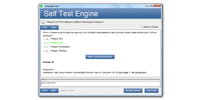
多くのユーザーが最初に試験に参加しているので、上記の試験と試験時間の分布は確かな経験を欠いており、したがって試験場所で混乱しがちであるため、つかむ時間は結局試験を完全に終わらせなかった。 この現象の発生を避けるために、SAP Certified Technology Professional - System Security with SAP NetWeaver 7.31試験問題は各試験シミュレーションテスト環境に対応する製品を持ち、ユーザーはプラットフォーム上の自分のアカウントにログオンし、同時に試験シミュレーションに参加したいものを選択します。P-ADMSEC-731試験問題は自動的にユーザーが実際のテスト環境のシミュレーションテストシステムと同じように提示され、ソフトウェア内蔵のタイマー機能は体系的な達成するために、ユーザーが時間をかけてより良い制御を助けることができます。P-ADMSEC-731テストガイドを使って問題を横から解決するためにユーザーのスピードを向上させるためにも。
簡潔な内容
分析後のすべての種類の試験の暦年に基づくエキスパートによるP-ADMSEC-731試験問題、それは開発動向に焦点を当てた試験論文に適合し、そしてあなたが直面するあらゆる種類の困難を要約し、ユーザーレビューを強調する 知識の内容を習得する必要があります。 そして他の教育プラットフォームとは異なり、SAP Certified Technology Professional - System Security with SAP NetWeaver 7.31試験問題は暦年試験問題の主な内容が長い時間の形式でユーザーの前に表示されていないが、できるだけ簡潔で目立つテキストで概説されていますP-ADMSEC-731テストガイドは、今年の予測トレンドの命題を正確かつ正確に表現しており、トピックデザインのシミュレーションを通して細心の注意を払っています。
コースの簡単な紹介
ほとんどのユーザーにとって、関連する資格試験へのアクセスが最初であるかもしれないので、資格試験に関連するコース内容の多くは複雑で難解です。 これらの無知な初心者によれば、P-ADMSEC-731試験問題は読みやすく、対応する例と同時に説明する一連の基本コースを設定し、SAP Certified Technology Professional - System Security with SAP NetWeaver 7.31試験問題でユーザーが見つけることができるようにしました 実生活と学んだ知識の実際の利用に対応し、ユーザーと記憶の理解を深めました。 シンプルなテキストメッセージは、カラフルなストーリーや写真の美しさを上げるに値する、P-ADMSEC-731テストガイドを初心者のためのゼロの基準に合うようにし、リラックスした幸せな雰囲気の中でより役立つ知識を習得します。 団結の状態を達成するために。
SAP P-ADMSEC-731 試験シラバストピック:
| セクション | 目標 |
|---|---|
| SAPアプリケーションおよびサービスのセキュリティ | - ABAPおよびJavaスタックのセキュリティに関する考慮事項 - SAP NetWeaverコンポーネントのセキュアな設定 - Webサービスのセキュリティ |
| システムセキュリティ管理 | - システムパラメータの堅牢化 - セキュリティパッチとアップデート - セキュリティ監視とロギング |
| アイデンティティと認証 | - シングルサインオン (SSO) のコンセプト - ログオン手順と認証メカニズム - Security Assertion Markup Language (SAML) の統合 |
| ネットワークおよび通信のセキュリティ | - セキュア通信 (HTTPS、SNC) - RFCセキュリティ設定 - GatewayおよびICFのセキュリティ設定 |
| ユーザーおよび権限管理 | - ユーザー管理 (SU01、ユーザータイプ、ロール) - 権限コンセプトと権限オブジェクト - ロールベースのアクセス制御 (PFCGロール) |
| SAP NetWeaverにおけるセキュリティの基本 | - SAP NetWeaverアーキテクチャのセキュリティコンセプト - セキュリティモデルの概要と原則 |
SAP Certified Technology Professional - System Security with SAP NetWeaver 7.31 認定 P-ADMSEC-731 試験問題:
1. Which of the following statements regarding authorization maintenance using transaction: PFCG are true?
Note: There are 2 correct answers to this question.
A) For authorizations with the status: "changed", the Profile Generator cannot create a connection
between the object entry and the menu.
B) SAP recommends assigning organizational level values directly in the authorization structure.
C) The status: "Old" for authorizations indicates that all field values in the subordinate levels of the
hierarchy are still current and that no new authorizations have been added.
D) SAP recommends merging authorizations in the background.
2. When you use the Central User Administration (CUA), when will your changes to user data become
effective in the child systems? Please also consider the options that the Application Link Enabling
technology (ALE) offers.
Note: There are 2 correct answers to this question.
A) The changes can be replicated by selecting the button "Distribute all data" in transaction SCUA.
B) The changes can be replicated by the background job "CUA_Distribute" in the central system.
C) The data for CUA will be replicated to the child systems every 60 minutes if no other
setting/configuration overrides this default value.
D) The IDocs that transport the changes to the user master data in the child systems can be collected and
transferred at a later time, triggered by a background job.
E) Changes are replicated immediately.
3. Which statement regarding the secure store of the Config tool is false?
A) The file is encrypted.
B) The file is synchronized during the start-up process of the engine.
C) The password of the SAP<SID>DB user is stored here.
D) It contains database connection parameters.
E) The SAP<SID>DB user is stored here.
4. Which of the following statements regarding table access in SAP systems (for example, SAP ECC) are
true? Note: There are 2 correct answers to this question.
A) Tables can be only accessed via transaction: SM30 if a maintenance dialog was created before.
B) With transaction: SE16N you can only display the content of tables.
C) Tables marked as current settings (SOBJ) can be changed although the client settings do not allow
changes to this client in a productive system.
D) Table access can be controlled using table: TDDAT.
5. The downtime of a SAP system is a crucial aspect within an upgrade project. What do you recommend to
keep system downtime to a minimum? Note: There are 2 correct answers to this question.
A) Use the latest service release for the upgrade.
B) Use the incremental conversion (ICNV) for large tables that need to be converted
C) Use a powerful separate hardware for the shadow instance.
D) Use the parallel processing option of R3load to speed up the import of the shadow repository
質問と回答:
| 質問 # 1 正解: A、C | 質問 # 2 正解: D、E | 質問 # 3 正解: B | 質問 # 4 正解: A、C | 質問 # 5 正解: A、B |


 0
0
 0
0
 0
0
 0
0
